
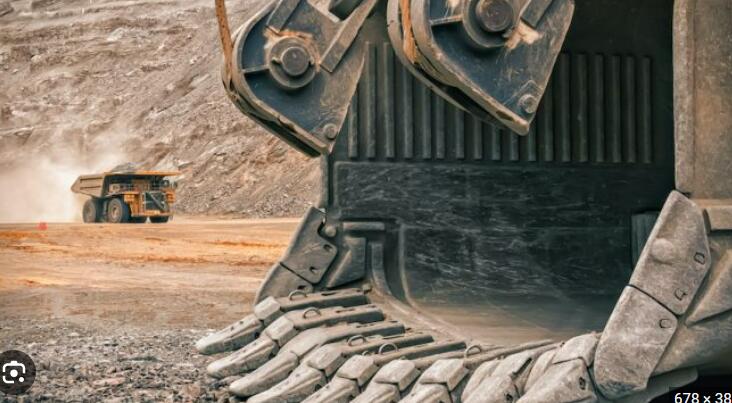
I’ve sold GET for limestone, granite, clay, frozen ground, and even abrasive slag. The single biggest mistake: using one tooth type for every material. That’s like using a butter knife to cut a tree.
The GET family (beyond just teeth)
- Bucket teeth & adapters – The tip is the wear part. Adapters should last 4-6 tip changes.
- Cutting edges – For loaders, reversible edges give double life.
- Shrouds & wear plates – Protect the bucket’s side bars and bottom.
- Heel shrouds – Most overlooked. Without them, the bucket heel wears into a hole.
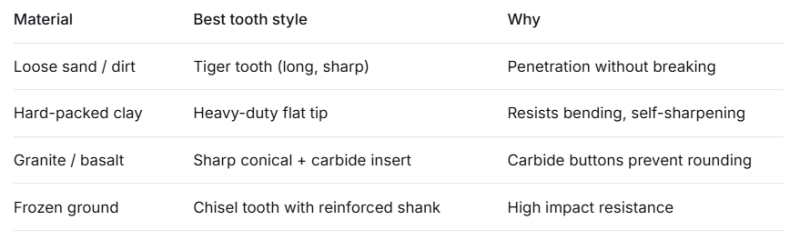
Material-specific tooth geometry
Wear life predictability (from my database)
In abrasive silica sand, a standard tooth lasts 80-120 hours. Switching to a through-hardened alloy (HB 450+) can double that to 200 hours. But you must also match the adapter — cheap adapters wear out the retaining pin hole, causing tooth loss.
Real story: Copper mine in Chile
They were changing teeth every 60 hours. I suggested switching to a two-part tip with tungsten carbide insert and a vertical pin retention (instead of rubber lock). Life went to 180 hours. But the adapter cost 40% more — still net savings of $3500 per month per excavator.
Maintenance mistakes I see daily
- Letting teeth wear to the adapter – Then you have to cut the adapter off. Change teeth when the wear indicator hole disappears.
- Mixing brands – Caterpillar K-series adapter + aftermarket tooth = loose fit, broken lugs. Always match system.
- No rotation plan – On loaders, rotate the cutting edge every 100 hours. On excavators, rotate teeth from center to corners.
Pro tip: GET hardness is not everything
Very hard (HRC 55+) GET is brittle. For rock with hidden boulders, you want toughness (impact resistance). Look for “dual hardness” teeth — hard surface, softer core.