
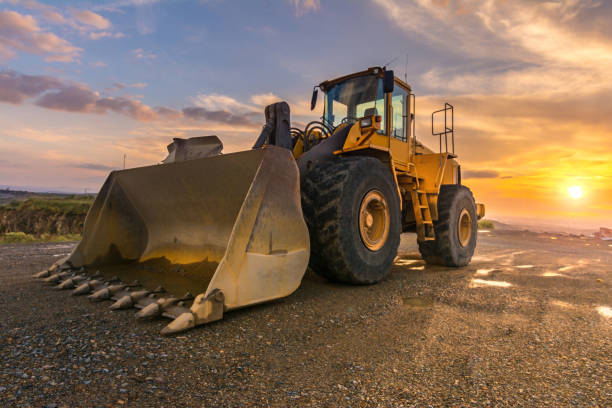
After 10+ years selling buckets, I can tell you: The wrong bucket will destroy your machine’s hydraulics and burn 30% more fuel. The right bucket makes the operator look like a hero.
Bucket families — not just “heavy duty”
- General purpose (GP) – 60-80% fill factor, mild steel. For soil, mixed debris. Cheapest, but dies fast in rock.
- Rock bucket – Reinforced shell, AR400 wear strips, 40-50% fill factor (smaller to reduce weight). Always check lip thickness — should be 60mm+ for granite.
- Trenching bucket – Narrow (6-24 inches), high sidewalls. The weak point is the side cutter — replaceable bolt-on cutters save the bucket.
- Skeleton / riddle bucket – For screening soil from rocks. Spacing between bars: 50-80mm typical. Keep spare bars — they bend easily.
- Light material bucket – Large volume (often 150% of GP), low sidewall angle. Used for wood chips, snow, grain. Danger: overloading can crack the backplate.
How to select bucket width & capacity (simple rule)
- Excavator: Bucket width should be 90-110% of track width. Too narrow = instability; too wide = cannot close on slopes.
- Wheel loader: Use the rated bucket capacity from the manufacturer. Overloading by 10% reduces transmission life by 50%.
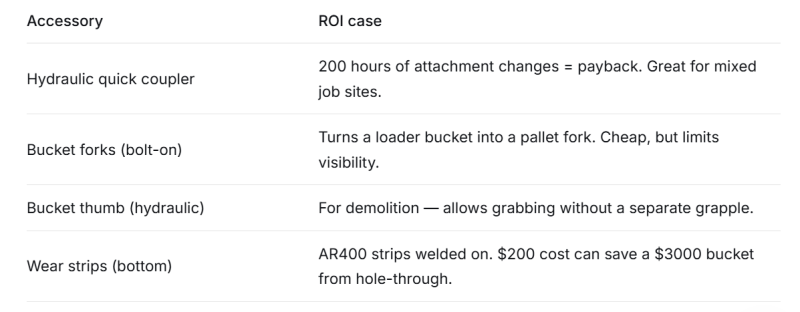
Accessories that pay for themselves
A lesson from a rental fleet
They used GP buckets on everything. After six months, all buckets had bent cutting edges and cracked backs. We switched to rock buckets for demolition and GP for soil only. Bucket life went from 800 to 3500 hours. Fuel consumption dropped 12% because the bucket was actually digging, not scraping.
My buying checklist for a new bucket
- Is the cutting edge bolt-on (reversible) or weld-on? Bolt-on is better.
- Are wear plates available as aftermarket? If not, bucket becomes disposable.
- What’s the pin diameter? Undersized pins elongate the stick’s ear holes.
- Weight — If it’s >15% of machine operating weight, you’ll lose lift capacity.